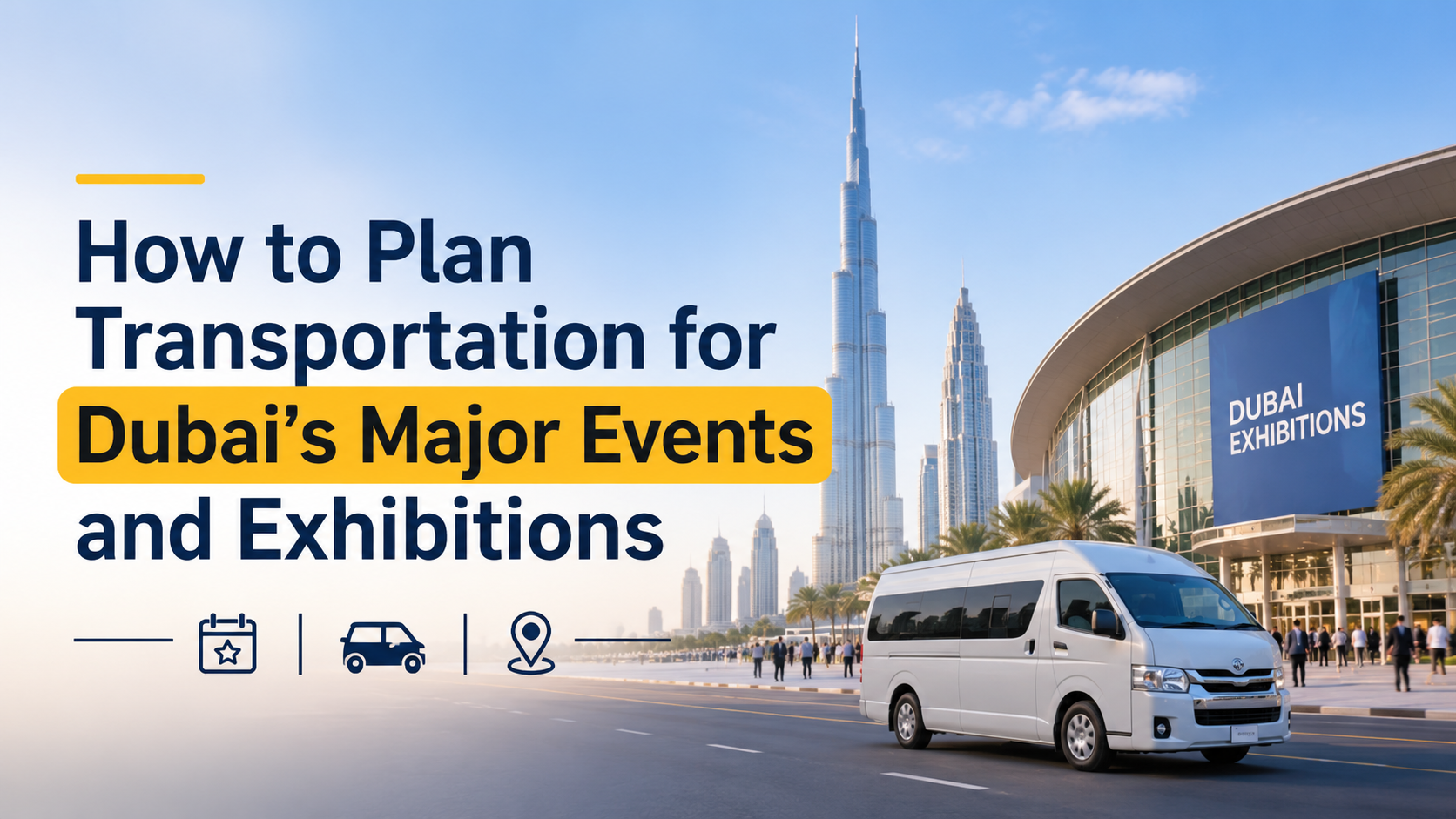
Dubai hosts major international exhibitions, trade shows, corporate conferences, business summits and entertainment events throughout the year. Events at venues such as Dubai World Trade Centre, Expo City Dubai, and Coca-Cola Arena attract thousands of visitors, exhibitors, speakers, and international delegates. Managing transportation for these events requires careful planning, from airport pickups and hotel transfers to venue access and group departures. Here are the essential steps to organise smooth and reliable event transportation across Dubai.
Start with the Event Schedule and Movement Requirements
Before arranging vehicles, map out how transportation will operate throughout the event. An exhibition with continuous visitor entry requires a different schedule from a conference where hundreds of delegates arrive before a keynote session. Divide transportation into different phases to allocate vehicles, drivers and pickup times efficiently.
- Pre-event setup: Arrange early transportation for event organisers, exhibitors, contractors and technical teams responsible for exhibition stand installation and venue preparation.
- Event opening: Schedule vehicles for concentrated arrivals before registration, keynote sessions and exhibition opening hours.
- During event hours: Maintain dedicated transportation for speakers, VIP guests, event staff and visitors requiring transfers between hotels and venues.
- Event closing: Coordinate return journeys and manage passenger groups leaving exhibition halls and conference centres.
- Post-event breakdown: Arrange transportation for exhibitors, contractors and technical teams responsible for dismantling exhibition stands and removing equipment.
Plan Transportation According to Attendee Arrival Patterns
Event attendees rarely arrive at the same time. International delegates follow flight schedules, while local visitors, exhibitors, and speakers have different arrival requirements. Use registration records, hotel bookings and flight information to estimate passenger demand and organise suitable transportation schedules.
- Airport arrivals: Group international delegates arriving at Dubai International Airport (DXB) or Al Maktoum International Airport (DWC) according to their flight arrival times and hotel destinations.
- Hotel departures: Schedule staggered pickups based on conference registration, keynote sessions and exhibition opening hours.
- Group allocation: Assign passengers with similar destinations and arrival times to the same vehicle.
- Peak arrival periods: Position additional vehicles during busy morning hours and major conference opening sessions.
- Waiting arrangements: Monitor delayed flights and maintain flexible pickup schedules to avoid unnecessary vehicle waiting charges.
Create Dedicated Transportation Arrangements for Exhibitors and Organisers
Exhibitors and event organisers have different transportation requirements from general visitors. Exhibition teams often need early access for stand preparation, while organisers require flexible transportation throughout the day to manage registration, operations and guest coordination.
Create separate vehicle assignments for each operational group:
- Exhibition stand teams: Arrange early pickups for exhibitors, contractors and installation staff attending setup sessions at Dubai World Trade Centre or Dubai Exhibition Centre.
- Event management teams: Provide flexible transportation for registration staff, operations managers and venue coordinators.
- Speakers and presenters: Schedule dedicated transfers around keynote sessions, panel discussions and presentation timings.
- General delegates: Coordinate hotel shuttles and scheduled transfers based on registration and conference hours.
- VIP guests: Arrange private chauffeur driven sedans and luxury SUVs for executives, sponsors and distinguished guests.
Coordinate Transportation Between Hotels and Exhibition Venues
Visitors attending major Dubai exhibitions often stay in different areas, including Downtown Dubai, Business Bay, Dubai Marina and Deira. Group nearby hotels into shared pickup routes to reduce travel time, avoid unnecessary vehicle trips and manage delegate transportation efficiently.
For example, arrange one shuttle to collect delegates from selected hotels in Dubai Marina before heading to Dubai Exhibition Centre at Expo City Dubai. Assign another vehicle to cover hotels around Downtown Dubai and Business Bay.
Consider the following factors when planning hotel pickup routes:
- Group nearby hotels based on their proximity and road connectivity.
- Calculate the number of delegates boarding at each hotel.
- Select vehicles based on passenger numbers and luggage requirements.
- Arrange pickup stops to minimise detours and travel time.
- Set departure times to ensure delegates reach the venue before registration.
- Schedule return drop offs according to hotel locations and conference closing times.
Manage Venue Entry, Drop Off and Passenger Movement
Reaching an exhibition venue is only one part of the transportation process. Large venues have designated passenger entrances, vehicle access points, security procedures and separate arrangements for visitors, exhibitors and service vehicles. Confirm these details before finalising routes and driver instructions.
- Passenger entrances: Identify the correct visitor entrance and designated drop off location.
- Exhibitor access: Confirm separate access arrangements for exhibition contractors, suppliers and stand installation teams.
- Coach parking: Check designated parking areas and vehicle waiting instructions.
- Pickup locations: Establish clear meeting points for passengers returning to hotels.
- Security procedures: Allow additional time for vehicle checks and venue entry requirements.
Arrange Transportation for Events Across Multiple Dubai Venues
Corporate programmes and business events sometimes involve several locations throughout the day. Delegates may attend a conference at Dubai World Trade Centre, travel to a networking dinner in Downtown Dubai and later return to their hotels. A coordinated movement schedule helps manage these transfers without disrupting event activities.
Prepare a central transportation schedule with the following details:
- Venue addresses and designated passenger entrances.
- Transfer distances between event locations.
- Passenger numbers for individual journeys.
- Scheduled departure and arrival times.
- Assigned vehicle categories and registration details.
- Driver waiting arrangements between sessions.
Plan for Post Event Traffic and Simultaneous Departures
Event departures require as much planning as arrivals. When exhibitions and conferences close, hundreds of attendees can leave within a short period. This creates queues at passenger pickup areas, increases vehicle waiting time and makes driver coordination more difficult.
Organise vehicle dispatch and passenger movement through these arrangements:
- Staggered departures: Schedule return journeys according to conference closing times and passenger requirements.
- Vehicle positioning: Arrange vehicles in designated waiting areas before attendees leave the venue.
- Passenger communication: Share exact pickup locations and vehicle identification details with delegates.
- Dispatch coordination: Release vehicles in an organised sequence to prevent congestion.
- Additional capacity: Arrange extra vehicles when large passenger groups require simultaneous departures.
Establish a Real-Time Transportation Coordination System
A central coordination system helps event organisers monitor vehicle movements, manage schedule changes and communicate with drivers throughout the event. This becomes especially important when several vehicles operate between Dubai hotels, airports and exhibition venues.
Maintain a central transportation record containing:
- Vehicle registration numbers and assigned categories.
- Driver names and direct contact numbers.
- Passenger lists and hotel pickup assignments.
- Daily departure and arrival schedules.
- Venue addresses and designated pickup locations.
- Alternative routes and emergency contact details.
- Additional vehicle and replacement arrangements.
Use GPS vehicle tracking to monitor driver locations and identify delays along routes such as Sheikh Zayed Road (E11), Al Khail Road (E44) and Sheikh Mohammed Bin Zayed Road (E311). A dedicated communication channel between drivers, event coordinators and on ground supervisors helps manage passenger changes and unexpected traffic conditions.
Prepare for Unexpected Transportation Challenges During an Event
Even a well planned event transportation schedule can be affected by unexpected situations. Road closures, vehicle breakdowns, delayed flights and changes in event timings can disrupt planned journeys. Prepare alternative arrangements for common transportation challenges.
- Traffic congestion: Identify alternative routes and allow additional travel time around major event venues.
- Delayed flights: Monitor flight arrival information and adjust airport pickup schedules accordingly.
- Vehicle breakdowns: Maintain access to replacement vehicles that can accommodate the affected passenger group.
- Last minute passenger changes: Keep flexible vehicle allocation arrangements for additional attendees.
- Pickup confusion: Share clear driver contact details, vehicle identification and designated meeting points.
What Should an Event Transportation Plan Include?
A complete transportation plan should cover passenger requirements, vehicle allocation, pickup schedules, venue access and backup arrangements. Use a checklist before the event to verify that all important transportation details are covered.
| Planning requirement | Details to confirm |
| Event information | Venue, dates, opening hours and daily schedule |
| Passenger details | Attendee numbers, arrival times and special requirements |
| Airport transfers | Flight details, terminals and pickup arrangements |
| Hotel transportation | Hotel locations, pickup times and shuttle routes |
| Vehicle arrangements | Vehicle types, seating capacity and fleet assignments |
| Venue access | Entry gates, drop off zones and parking permissions |
| Driver coordination | Driver contacts, vehicle details and route instructions |
| Departure planning | Return schedules and designated pickup points |
| Backup arrangements | Replacement vehicles and alternative routes |
Planning Transportation Effectively for Dubai’s Major Events
A well organised transportation plan helps event organisers manage passenger movements, reduce travel delays and coordinate vehicles across multiple locations. Consider attendee numbers, hotel locations, journey distances, venue access and event timings before confirming arrangements. Group passengers by destination, allocate suitable vehicles, establish clear pickup points and prepare return schedules. For large exhibitions and corporate conferences, maintain a central record of drivers, routes, airport transfers and backup vehicles to keep transportation operations organised throughout the event.
Ready to Plan Your Dubai Event Transportation? Arrange reliable event transportation across Dubai with Destivo Travel & Tourism. Choose from RTA approved vehicles, including chauffeur driven sedans, spacious SUVs and group transport options, backed by 18 years of collective industry experience. Contact Destivo to plan your corporate event and exhibition transfers.